Three variables decide the outcome when a burner fires heavy oil or waste liquid. The viscosity of the fuel at the nozzle, the quality of atomisation, and how the flame is matched to the combustion chamber. Get those three right and emissions, coking and maintenance intervals follow. Get them wrong and no amount of control tuning will recover the performance.
Fuel properties that shape the whole design
Heavy oil and waste liquids are not defined by a single specification. They vary by source, by season and by how they were stored, so the burner has to be designed around a range rather than a number.
Viscosity is the controlling property, because it decides whether the fuel can be atomised at all. Atomisation in practice requires a viscosity on the order of 70 seconds Redwood No. 1, roughly 15 cSt, and reaching that figure with heavy fuel oil means heating it to about 260 F, or about 127 C [1]. This is why heavy oil and waste oil installations are built around a heated fuel circuit with a defined preheat temperature, not just a pump and a nozzle.
Calorific value sets the firing rate for a given nozzle and air setting. For context, one gallon of used oil processed for fuel carries roughly 140,000 Btu, comparable to normal heating oil [2]. Density, water content and solids content then determine what has to happen upstream: free water causes unstable ignition and flame-out, while abrasive solids erode nozzles and pass through to the stack as particulate.
Contaminants matter for a second reason: they decide whether the fuel can legally be burned at all. Under the US used oil management standards, used oil burned for energy recovery must stay below the allowable levels in Table 1 of 40 CFR 279.11 - arsenic 5 ppm, cadmium 2 ppm, chromium 10 ppm, lead 100 ppm, total halogens 4,000 ppm, with a minimum flash point of 100 F. Used oil containing more than 1,000 ppm total halogens is presumed to be hazardous waste unless the presumption is rebutted [3]. Small used-oil-fired space heaters are exempt from the off-specification burner requirements only if they burn oil generated on site or received from household generators, have a maximum capacity of 0.5 million Btu per hour, and vent combustion gases to ambient air [2].
Atomisation: where flame quality is actually decided
Atomisation determines droplet size, and droplet size determines burnout time. Large droplets do not finish burning in the time available inside the furnace, which shows up as carbon monoxide, unburned carbon, soot and coking rather than as a clean flame.
Two families of atomisation dominate heavy and waste liquid firing:
Pressure (mechanical) atomisation forces fuel through a small orifice at high pressure. It is simple and efficient for light oils, but it demands low viscosity and is sensitive to solids, so it is a poor fit for dirty, viscous waste streams.
Twin-fluid atomisation uses compressed air or steam to break up the fuel. It tolerates higher viscosity, produces finer and more uniform droplets, and is therefore the usual choice for waste oil, coal tar and similar fuels.
The atomising medium ratio is a real design parameter, not a fixed setting. More atomising air gives finer droplets and a shorter, more intense flame; less gives a longer flame. That choice has to match the furnace, because flame length and shape must fit the combustion chamber rather than the other way round.
Preheat discipline belongs here as well. Firing a boiler with either too high or too low a preheat temperature produces poor combustion performance, which is why the manufacturer's operating data should be treated as a setpoint rather than a starting point [4]. As water and light fractions in waste oil vary, preheat and atomising air settings normally need periodic re-tuning, not a one-off commissioning.
Combustion air and flame geometry
Once the fuel is atomised, the remaining variables are air distribution and residence time. Excess air controls the oxygen available for burnout, and flue gas oxygen is the practical handle operators use to correct it. Too little air and the flame runs rich, producing CO and soot; too much air and the flame cools, increases stack losses and raises the formation of nitrogen oxides.
For heavy fuel oil, one documented route to lower nitrogen oxide emissions without sacrificing burnout is combustion with high-temperature air, where the fuel is introduced into a hot, low-oxygen environment that limits peak flame temperature. Regenerative burner systems firing heavy fuel oil have been developed and tested specifically for industrial application on this principle [5].
Flame shape also dictates where heat lands. A flame that impinges on tubes or refractory creates local hot spots, and local overheating is the mechanism behind furnace tube coking and refractory damage. This is a geometry problem before it is a control problem: nozzle selection, flame length and combustion chamber volume have to agree.
Fuel switching and blending: what the experiments show
Burning waste liquids is often a blending exercise. Experimental work on heavy fuel oil and used motor oil blends has evaluated combustion and emission behaviour with the aim of establishing whether such blends are feasible as fuel in practical firing systems [6]. Related work on waste engine oil blended with diesel examined combustion parameters and the resulting emissions for an alternative fuel produced from a waste stream [7].
Two practical conclusions follow from this literature. First, blends behave differently from the virgin fuel they replace, so burner settings should be established by test rather than by extrapolation. Second, the quality of preparation upstream - water removal, filtration and homogenisation - has as much influence on the result as the burner itself.
Failure modes and countermeasures
Coking of furnace tubes and burner parts: usually driven by flame impingement, poor atomisation or incorrect preheat. Countermeasure: correct flame geometry, correct atomising air ratio, and cleaning routines.
Nozzle erosion and plugging: caused by solids and by ash-forming compounds. Countermeasure: filtration upstream and a defined nozzle inspection interval.
Unstable flame and flame-out: driven by free water and by viscosity swings. Countermeasure: settling or separation, consistent preheat, and reliable flame detection.
High particulate and soot: usually incomplete combustion from oversized droplets. Countermeasure: finer atomisation, correct air distribution and verification of burnout at part load, not only at full firing.
Cleaning practice matters as much as design. Burner heads, flame detectors, air ducts and fan impellers all need scheduled cleaning, and the pre-ignition purge and safety checks must be completed every time [8].
Specification checklist for heavy and waste liquid fuels
Provide the fuel range, not a single sample: viscosity at two or three temperatures, density, calorific value, water and solids content, ash and sulphur.
State the preheat temperature available at the burner, and who supplies the heated circuit.
State the atomising medium - compressed air or steam - and its pressure and flow available on site.
Give the furnace geometry: combustion chamber volume, flame length limits and tube spacing.
State the required firing range and turndown, including the minimum load that must run cleanly.
Agree the emissions and opacity expectations for the actual fuel, and the measurement basis.
Confirm the local regulatory position for the fuel in use before ordering, including any contaminant limits and record-keeping obligations.
The bottom line
Heavy oil and waste liquid firing is a fuel preparation problem more than a combustion control problem. Heat the fuel to the viscosity the atomiser needs, atomise it finely and consistently, then match flame shape to the combustion chamber. Everything else - emissions, coking frequency and maintenance cost - is downstream of those three decisions.
References (foreign sources)
[1] Institute of Marine Engineering, Science and Technology. Heavy Oil Burning. https://library.imarest.org/record/221/files/208.pdf
[2] US EPA. Managing Used Oil: Answers to Frequent Questions for Businesses (used oil for fuel energy content; used oil-fired space heater conditions). https://www.epa.gov/hw/managing-used-oil-answers-frequent-questions-businesses
[3] eCFR. 40 CFR 279.11 Used oil specifications, Table 1. https://www.ecfr.gov/current/title-40/chapter-I/subchapter-I/part-279/section-279.11
[4] US EPA. Guidelines for Burner Adjustments of Commercial Oil-Fired Boilers. https://nepis.epa.gov/Exe/ZyPURL.cgi?Dockey=91015PPO.TXT
[5] Low NOx heavy fuel oil combustion with high temperature air. Fuel, 2006. https://www.sciencedirect.com/science/article/abs/pii/S0016236106003255
[6] Experimental investigation on combustion and emission of heavy fuel oil and used motor oil blends. Fuel, 2021. https://www.sciencedirect.com/science/article/abs/pii/S0016236121016203
[7] Experimental Testing of Combustion Parameters and Emissions of Waste Engine Oil and Diesel Blends. Energies (MDPI), 2021. https://www.mdpi.com/1996-1073/14/18/5950
[8] BNTET. Cleaning of Diesel Heavy Oil and Waste Oil Burner (maintenance procedure and safety notes). https://www.bntet-burner.com/news/471.html
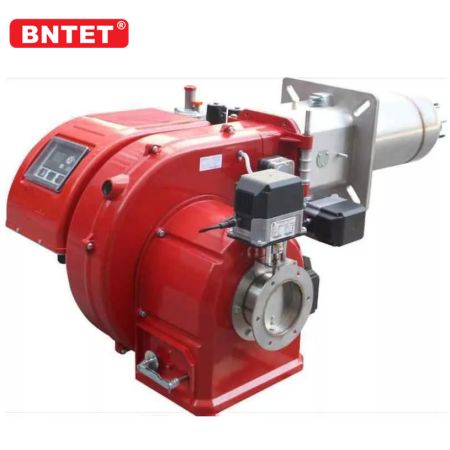
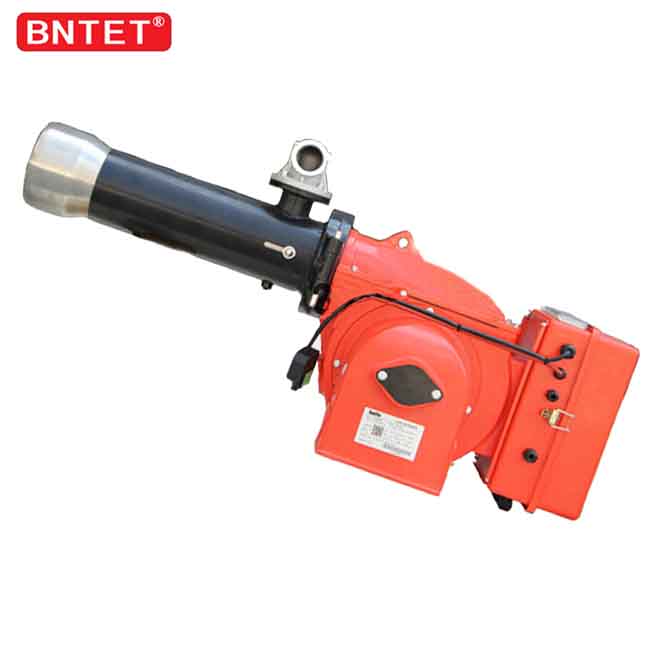
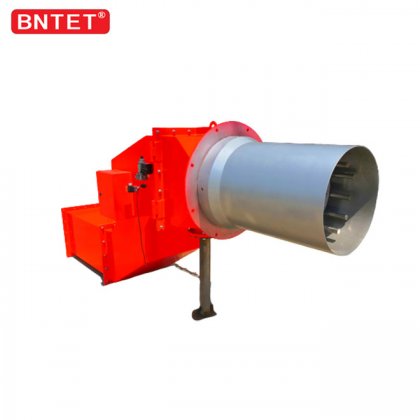
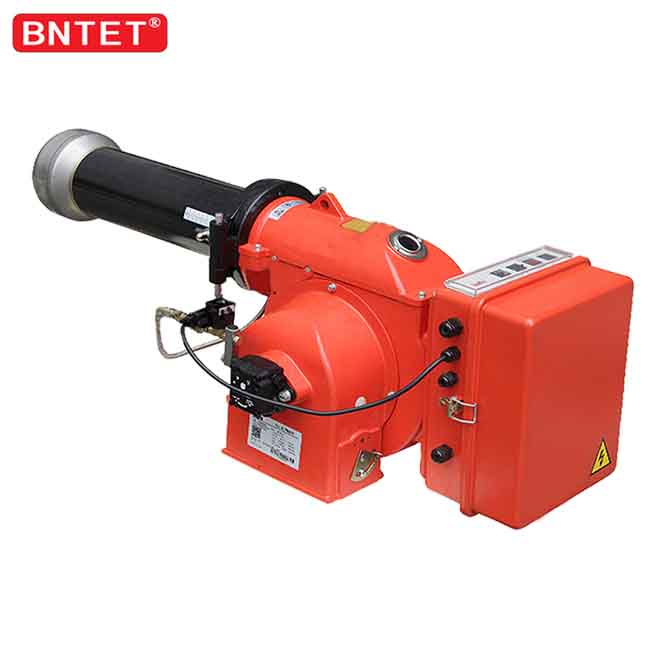
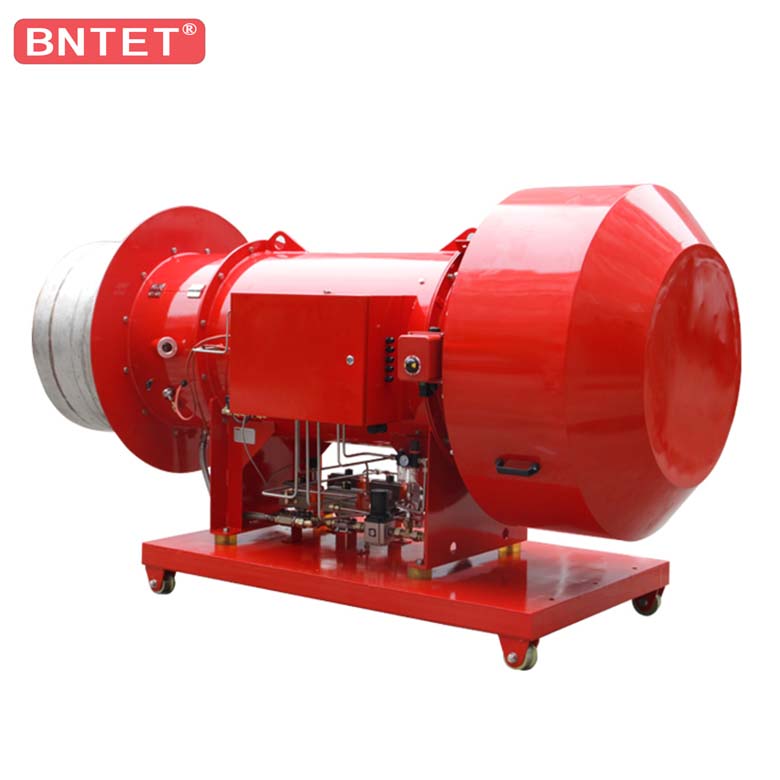
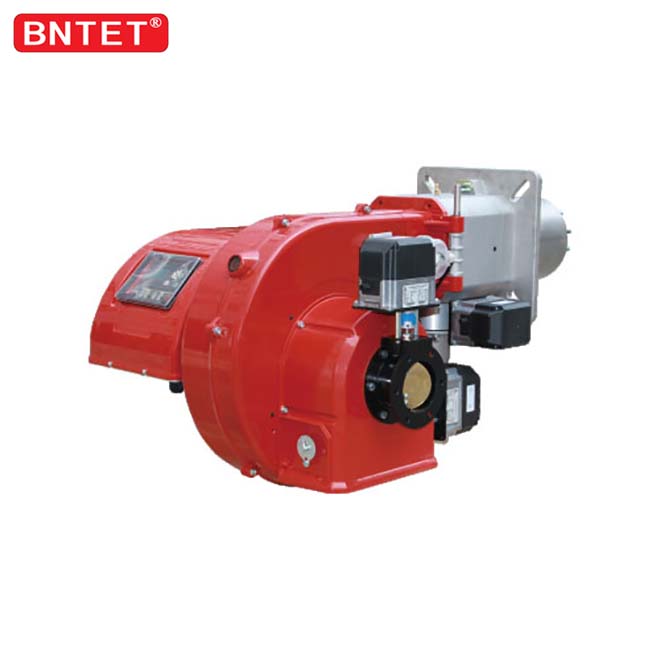
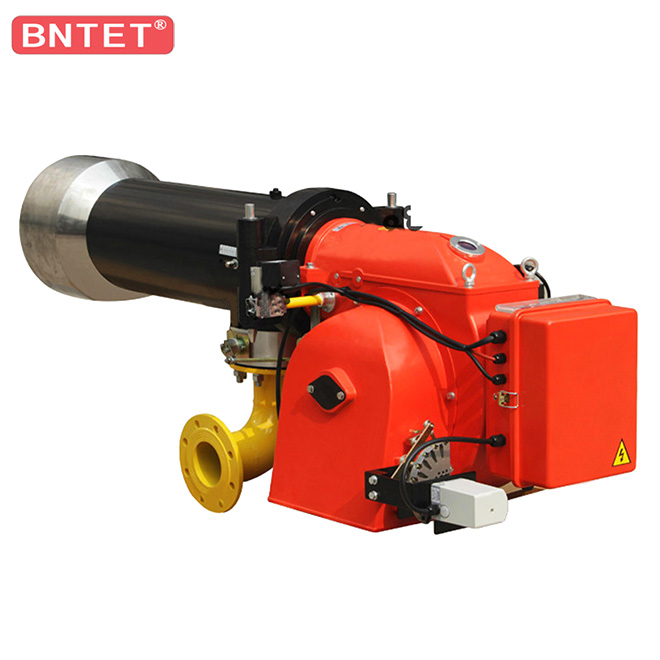
Related BNTET products: the BNW waste oil burner series covers 61 to 1,660 kW for boilers, kilns and dryers firing heavy oil and waste liquids - https://bntet-burner.com/product/Waste-Oil-Burner/