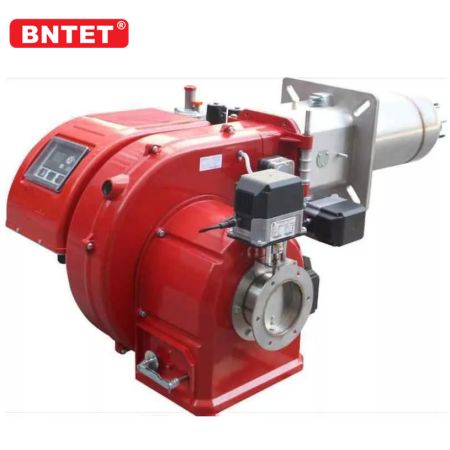
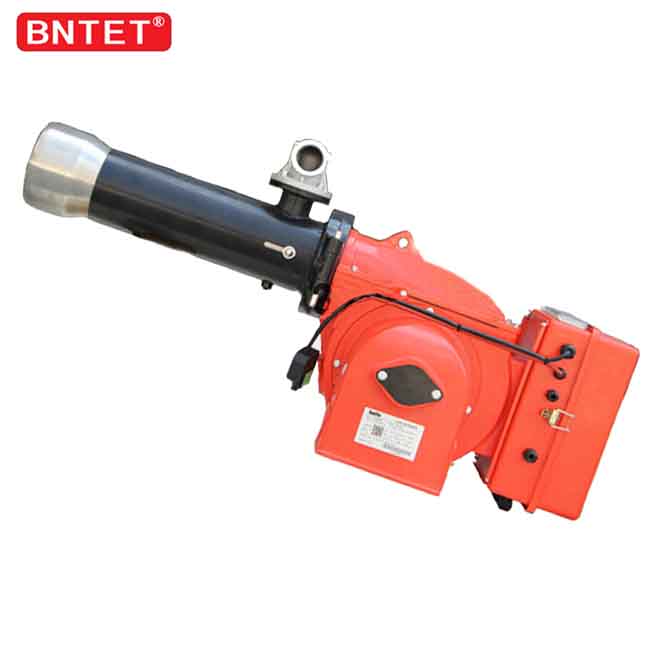
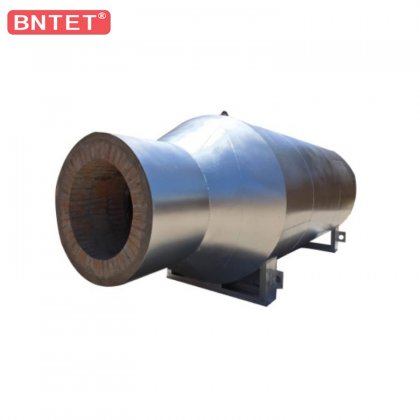
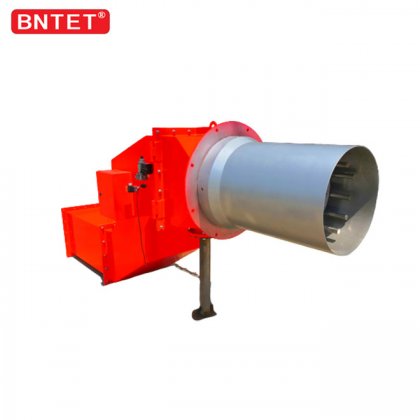
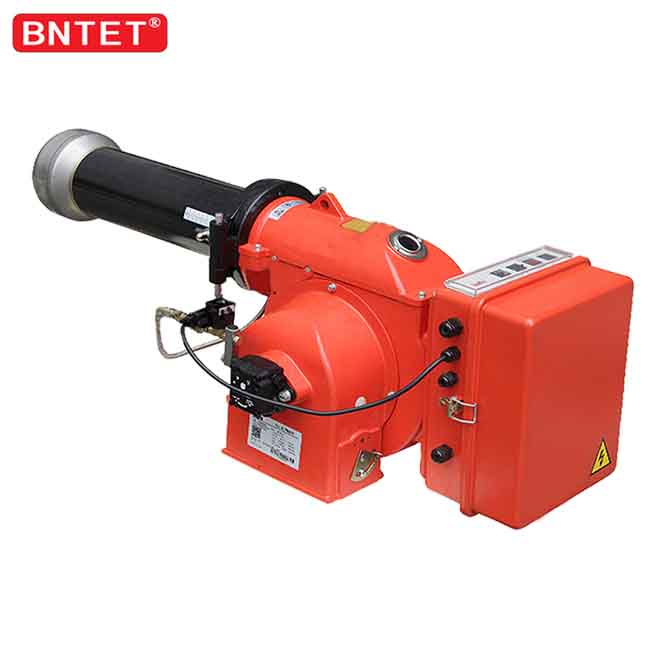
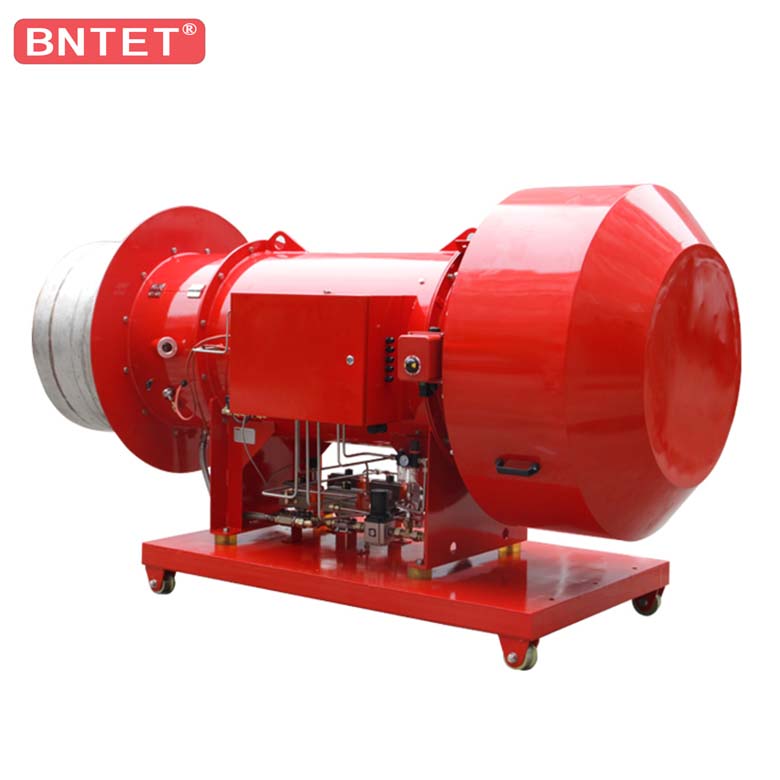
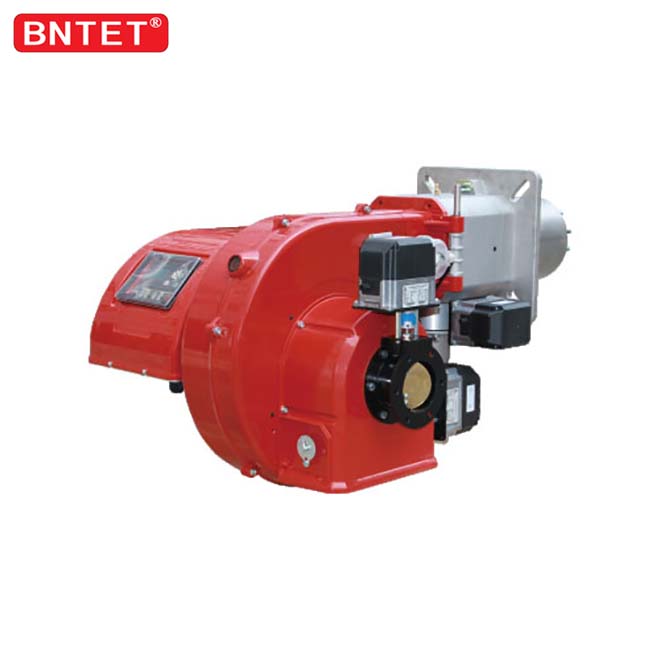
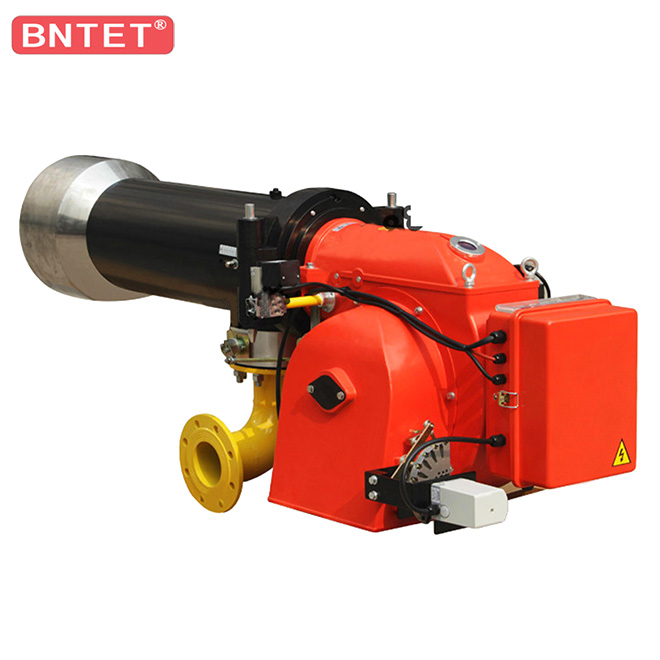
An industrial gas burner turns natural gas or another specified gaseous fuel into controlled heat. It supplies fuel and combustion air to a boiler or heating chamber, ignites the mixture, and manages the flame as heat demand changes. The right burner helps a plant maintain a stable process, use fuel responsibly, and operate safely.
At BNTET, we understand that a burner is only one part of a heating system. Its performance depends on the boiler or furnace, available gas pressure, combustion chamber, control setup, and on-site commissioning. This guide explains the essentials so you can define your project requirements before choosing a model.
How Does an Industrial Gas Burner Work?
A typical forced-draft gas burner uses a fan to deliver combustion air. Gas passes through a suitable gas train, where components manage its supply and pressure. The burner control system runs a defined start-up sequence, initiates ignition, and monitors the flame. If a required safety condition is not met, the control system shuts off the gas supply.
During operation, the burner adjusts heat input according to its control type. A one-stage burner operates at a fixed firing level while it is on. A two-stage burner can switch between two firing levels. A modulating burner varies its output across an approved operating range. The appropriate option depends on the load pattern and the heat generator’s requirements.
Where Are Gas Burners Used?
Industrial gas burners serve a wide range of heat applications, including:
Steam and hot-water boilers: Heat for production lines, facilities, and utility systems.
Industrial furnaces and ovens: Controlled heating for manufacturing processes.
Dryers and thermal equipment: Heat for drying and other process applications.
Incinerators and related systems: Combustion support where the equipment design calls for a gas burner.
Each application needs its own burner-to-chamber match. A model suitable for one boiler may be unsuitable for another unit with the same nominal heat output.
What Matters When Choosing a Gas Burner?
1. Required firing range. Share the heat generator’s rated input and the minimum and maximum process load. This helps determine whether one-stage, two-stage, or modulating control is appropriate.
2. Fuel and supply conditions. Confirm the gas type, available inlet pressure, pressure variation, and local gas specifications. These details affect gas train selection and burner setup.
3. Combustion chamber compatibility. Check the chamber dimensions, back pressure, mounting flange, door thickness, and required blast tube length. Burner selection should account for both heat output and the chamber operating conditions.
4. Control and safety requirements. Specify the boiler controller interface, flame supervision, safety interlocks, and any site-specific automation needs. The final configuration must meet applicable local requirements.
5. Emissions and commissioning. If a project has a NOx limit, state the limit, measurement basis, and operating conditions in advance. Emissions performance must be assessed for the complete burner and heat generator combination and verified during commissioning.
Why Proper Setup Matters
Combustion air must be set to support complete burning without sending unnecessary heat up the stack. Too little air can lead to incomplete combustion and carbon monoxide. Too much air increases the volume of hot exhaust gas and can reduce overall boiler efficiency. A qualified technician should set the air-to-fuel ratio and verify combustion with appropriate instruments at the relevant operating points. [1]
Routine inspection also matters. Follow the equipment manual and local rules for checking the gas train, ignition components, flame sensor, air path, and safety controls. Keep maintenance records and arrange professional service when faults occur.
Discuss Your Project with BNTET
BNTET offers industrial gas burner solutions for boiler and process heating projects. To help us review your application, please send the equipment type, required heat input or boiler capacity, gas type, available gas pressure, power supply, chamber dimensions, operating schedule, and any emissions or control requirements. Our team can then discuss a suitable burner configuration and the information needed for technical confirmation.
Looking for an industrial gas burner? Contact BNTET with your project details to discuss a suitable solution.
Frequently Asked Questions
What is the difference between a one-stage and a modulating gas burner?
A one-stage burner fires at one set output when running. A modulating burner adjusts output within its rated range to follow changing heat demand. The right choice depends on your system and operating pattern.
Can I choose a burner based only on boiler capacity?
No. Capacity is a starting point. Gas supply, chamber back pressure, dimensions, mounting details, and control requirements also affect selection.
Does a gas burner guarantee low emissions?
No single burner can guarantee a site-wide emissions result on its own. Fuel quality, chamber design, operating conditions, burner configuration, and commissioning all affect measured emissions.
What information should I send for a quotation?
Send the application, required firing range, gas type and pressure, power supply, chamber and mounting details, control requirements, destination market, and any emissions limits.
Technical Reference
[1] U.S. Department of Energy, Improve Your Boiler’s Combustion Efficiency: https://www.energy.gov/sites/prod/files/2014/05/f16/steam4_boiler_efficiency.pdf