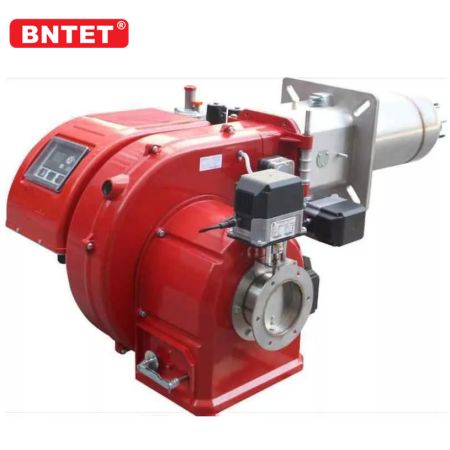
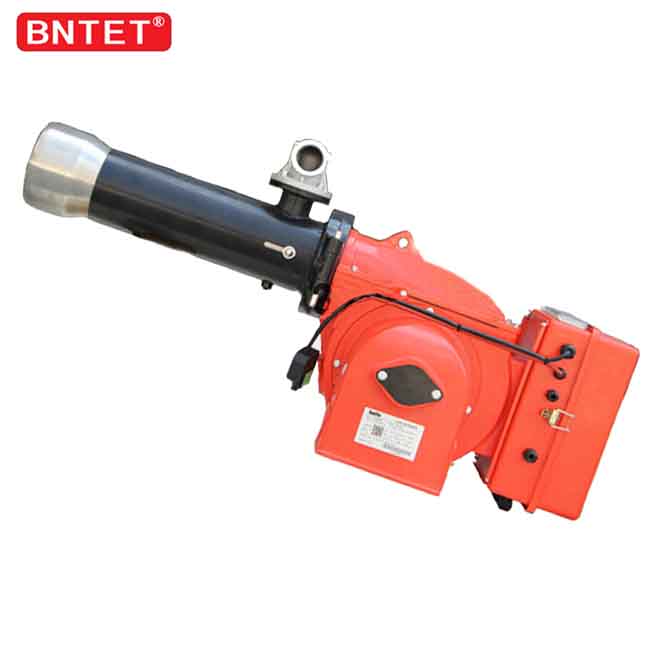
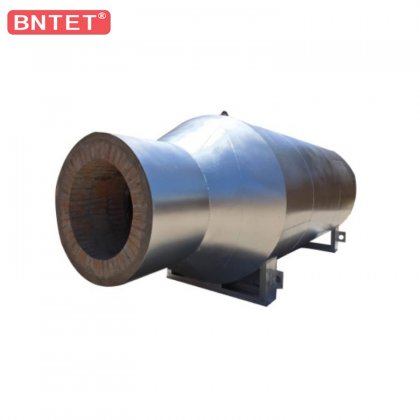
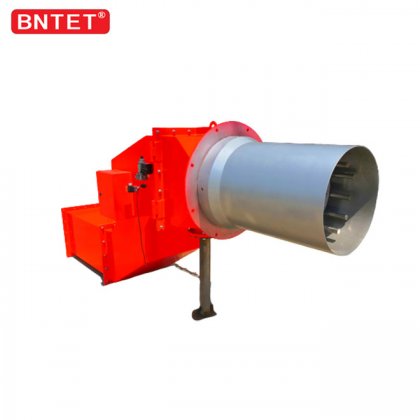
A boiler burner cannot be selected from its maximum power rating alone. It must provide the required heat input across the boiler's normal operating range and work with the combustion chamber, fuel supply and control system. A model that appears large enough on a product list may still be unsuitable at the project's actual furnace pressure or minimum load.
This guide explains six practical checks that boiler manufacturers and plant engineers can use when preparing a burner inquiry. It covers gas and liquid-fuel burners; the details must always be confirmed for the specific heat generator and site.
1. Separate Boiler Output from Burner Heat Input
Start by identifying what the boiler capacity figure represents. The useful heat delivered as steam or hot water is different from the fuel energy entering the burner. For a preliminary estimate:
Required fuel heat input ≈ required useful heat output ÷ expected boiler efficiency
For example, if a project requires 1,000 kW of useful heat and the assumed boiler efficiency is 90%, the preliminary fuel heat input is approximately 1,111 kW. This is an illustrative calculation, not a burner recommendation. Confirm the boiler manufacturer's rating basis, the fuel's lower or higher heating value, feedwater conditions and any project margin before making a selection.
Also request the real load profile. A boiler that reaches full load briefly but operates at partial load for most of the day may need a different control strategy from a boiler that runs near its rated output continuously.
2. Check the Firing Range at the Actual Chamber Pressure
The relevant question is not simply, “Can this burner reach 1,111 kW?” It is, “Can it operate across the required load range at the boiler's combustion chamber pressure?” Burner catalogues commonly show a firing-range chart with heat input on one axis and chamber pressure on the other. Riello's technical literature explicitly uses this relationship to define the useful operating field for burner selection. [1]
Ask the boiler manufacturer for the furnace pressure or back pressure at the relevant firing rates. Plot the required operating points against the selected burner's published working field. Do not treat a burner's maximum rating measured under one set of test conditions as proof that it will deliver the same output on every boiler.
The flame must also suit the chamber geometry. Check chamber length and diameter, burner-head projection, door thickness, mounting flange and available service space. Burner manufacturers note that flame dimensions and chamber dimensions need to be considered together. [2]
3. Confirm the Fuel and Supply Conditions
For a gas burner, specify the gas type, calorific value, minimum and maximum inlet pressure and expected pressure variation. The required gas train and its pressure losses must be assessed for the chosen firing rate. For a liquid-fuel burner, supply the fuel grade and relevant properties; depending on the fuel, filtration, heating and atomization arrangements may be necessary.
A fuel name alone is not enough. The burner configuration must match what is actually available at the installation point, especially at maximum load. If two fuels are required, state whether the project needs alternative-fuel operation and how changeover will be handled.
4. Match the Control Mode to the Load Pattern
A one-stage burner operates at one firing level while running. A two-stage burner has two firing levels. A modulating burner adjusts output within its approved range. The turndown ratio is the maximum firing rate divided by the minimum stable firing rate. The U.S. Department of Energy notes that a higher turndown ratio can help reduce boiler short cycling where loads vary. [3]
More turndown is not automatically the best choice for every project. Consider the minimum process load, the boiler's control system, the cost of additional controls and the need for stable combustion throughout the selected range.
5. Define Safety, Emissions and Interface Requirements
Before placing an order, align the burner with the boiler's operating controls and safety interlocks. Confirm the power supply, demand signal, flame supervision, gas or oil safety devices, alarm contacts and the required start-up and shutdown sequence. Document who supplies each component and who is responsible for integration.
If the project has emissions limits, provide the applicable pollutant limits, measurement basis and operating points. A low-NOx label on a burner does not establish the emissions of the complete installed boiler. Chamber design, fuel and commissioning also affect measured results.
6. Plan Commissioning and Record Results
Final settings must be checked on the installed system by qualified personnel. The U.S. Environmental Protection Agency's Boiler Tune-up Guide describes measuring operating conditions, including flue-gas oxygen and carbon monoxide, over relevant firing positions. [4] These measurements help verify combustion while the safety controls remain in operation.
Keep the burner settings, test results and fault history with the equipment documents. Those records give operators a baseline for future maintenance and troubleshooting.
Send BNTET the Right Project Data
For a useful first technical review, send BNTET your boiler type and rated output, expected minimum and maximum load, fuel specifications, available fuel pressure, furnace-pressure data, chamber and mounting drawings, electrical and control requirements, and applicable emissions targets. We can then discuss burner options and identify any further measurements needed before confirming a model.
Need an industrial boiler burner? Share your boiler and fuel data with BNTET to start a technical selection review.
Frequently Asked Questions
Can I use a burner's maximum kW rating as my only selection criterion?
No. Check the required firing range against the burner's working field at the actual chamber pressure, then confirm the fuel supply, geometry and controls. [1]
What is burner turndown ratio?
It is the maximum firing rate divided by the minimum stable firing rate. For example, a verified range from 1,000 kW to 250 kW corresponds to a 4:1 turndown ratio. The example does not describe a specific BNTET model. [3]
Is boiler output the same as burner input?
No. Boiler output is useful heat delivered to the process; burner input refers to fuel energy supplied. Boiler efficiency and the fuel heating-value basis affect the relationship.
When should emissions performance be confirmed?
Define the project's limits before selection and verify the installed system during commissioning under the specified operating conditions.
References (English Sources)
Riello. Product Catalogue — Process Burners (firing-rate curves and combustion chamber pressure). https://www.riello.com/international/files/catalogo-pdf/riello_products_catalogue_international-markets_process_burners_eng.pdf
Riello. Technical Data Leaflet — Modulating Gas Burners (flame and combustion chamber dimensions). https://www.riello.com/international/products/burners?action=download&id=21BHGLAWRF-69557f11fd35b4ff1db6e7156c0423dd
U.S. Department of Energy. Upgrade Boilers with Energy-Efficient Burners and Minimize Boiler Short Cycling Losses. https://www1.eere.energy.gov/manufacturing/tech_assistance/pdfs/steam24_burners.pdf ; https://www.energy.gov/eere/amo/articles/minimize-boiler-short-cycling-losses
U.S. Environmental Protection Agency. Boiler Tune-up Guide. https://www.epa.gov/sites/default/files/2021-03/documents/tune-up_guide_revised_0.pdf